Lieutenant Berrendo
For Whom the Bell TollsLieutenant Berrendo is a Nationalist officer whose conduct at El Sordo’s last stand makes him a figure of guarded restraint within a brutal military victory. He intervenes when Captain Mora’s fury threatens to overwhelm a subordinate, but after the bombing he kills the sole surviving guerrilla, Joaquín, and supervises the collection of the dead and their weapons. His actions hold compassion and violence together without resolving their contradiction.
Identity and Introduction
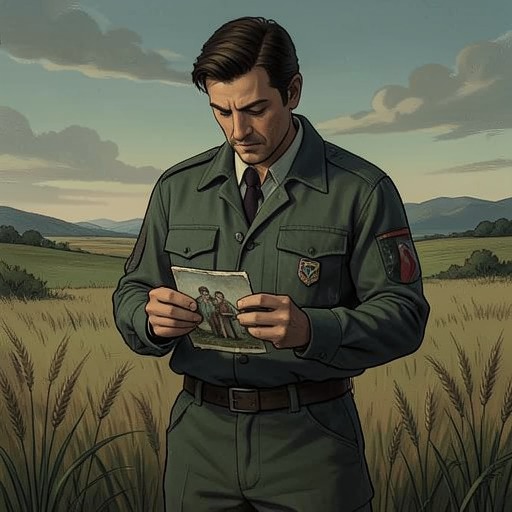
Berrendo is identified as Paco Berrendo, a young lieutenant on the Nationalist side. He is present during the assault on El Sordo’s hilltop, where he observes Captain Mora shouting at the defenders and firing toward a dead horse. The narrative distinguishes him from Mora: Berrendo is described as a thin, sunburned man with quiet eyes, and his response to the captain’s agitation is measured rather than openly furious.
His personal connection to the fighting is also evident. The dead young lieutenant on the slope had been Berrendo’s best friend. The narrative does not make this bereavement the basis of a speech or a change in orders; instead, it sits alongside his immediate responsibility for the patrol and the assault. His position requires him to act in a scene where grief, vengeance, and military command are close together.
Command During the Assault
When a soldier says that he is afraid, Berrendo watches Mora and thinks the captain may shoot the man. He addresses the captain by name, and then suggests that the soldier may be right. The intervention is brief, but it checks Mora’s escalating anger and acknowledges the subordinate’s fear rather than treating it as disloyalty.
That exchange is a small counterpoint to the attack’s larger violence. Berrendo does not stop the assault or challenge the military objective; he acts within its chain of command, trying to restrain an immediate threat from his own side. His quiet manner contrasts with Mora’s shouting and with the bombardment about to destroy the defenders’ position.
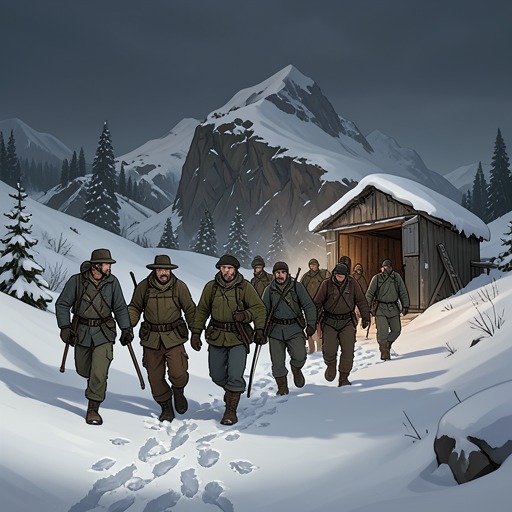
After the planes bomb and machine-gun the hilltop, Berrendo advances cautiously. He keeps heavy fire on the crest and sends a patrol to a bomb crater from which grenades can be thrown. Before climbing out to inspect the position, he throws four grenades into the wreckage, taking precautions against the possibility that someone is still alive and waiting. His conduct here is tactical: the apparent end of resistance does not, in his judgment, make the hilltop safe.
Joaquín and the Survivors
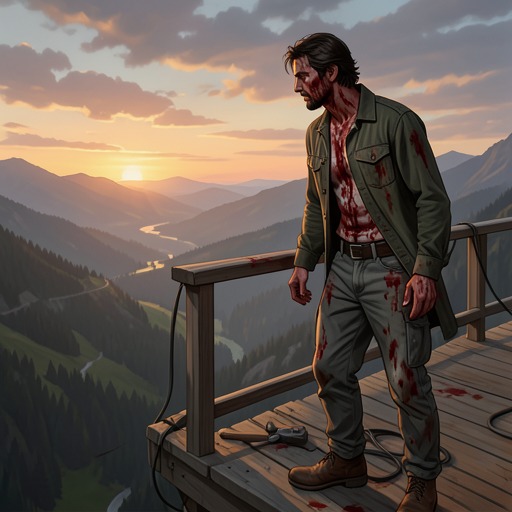
The search finds only one living person on the hilltop: Joaquín, unconscious beneath Ignacio’s body. Berrendo makes the sign of the cross and shoots the boy in the back of the head. The narration presents the act as quick, while making clear that Joaquín had been unconscious and had not known what was happening since the bombing struck near him. The moment therefore does not describe a contest or an exchange of fire; it is Berrendo’s decision to kill a helpless survivor.
That decision complicates the restraint he showed toward the frightened soldier. Berrendo had checked Mora when the captain seemed ready to turn his fury on one of his own men; faced with Joaquín, he gives no order to take a prisoner and no explanation for his own action. His religious gesture and the speed of the shot frame the killing as deliberate, but they do not soften its consequence. The boy’s survival ends with Berrendo’s bullet.
Aftermath and Narrative Significance
Once the hilltop is secured, Berrendo surveys the dead and the positions of the troops, then orders the dead men’s horses brought up and the bodies tied across their saddles for transport to La Granja. He also directs that the rifles and pistols be collected and that the automatic rifle be packed on a horse. Victory is rendered as a practical process of recovery and removal: the dead are carried away, and weapons become captured matériel.
Berrendo asks for Sordo’s body to be identified by the automatic rifle and orders that the head be cut off and wrapped in a poncho; he then extends the order to the other dead. These instructions place the aftermath beyond ordinary battlefield evacuation. Berrendo treats the dead as objects to be identified, transported, and displayed or otherwise handled, while keeping the precise purpose of collecting the heads unstated. The narrative supplies the command, not an explanation of what is to follow.
His portrayal is consequently defined less by a developed personal history than by a sequence of decisions under pressure: he moderates Mora, approaches a position he considers dangerous, kills Joaquín, and organizes the handling of the dead and captured arms. The contrast between his composed manner and the acts he carries out prevents composure from serving as proof of mercy. In the hilltop’s aftermath, violence appears not only as rage but also as something administered through orders, precautions, and military procedure.